Still Managing Payroll Manually? Here's Why That's Costing Your Business More Than You Think


Audio Summary
Picture this: It's the last working day of the month. Your HR team is buried in spreadsheets, cross-checking attendance logs, manually computing tax deductions, and chasing down approvals — all while employees are waiting for accurate, on-time salaries.
For thousands of Indian businesses — from growing startups to established enterprises — payroll remains one of the most time-consuming and error-prone back-office functions. A single miscalculation can trigger compliance penalties. A missed deadline damages employee trust. And as your workforce scales, the complexity only multiplies.
What Is a Payroll Management System?
A payroll management system is an integrated platform designed to automate and streamline every aspect of employee compensation — from salary calculation and tax deductions to direct bank transfers and payslip generation.
Unlike traditional spreadsheet-based approaches, modern payroll software connects seamlessly with your existing HR ecosystem — attendance systems, accounting tools, and compliance frameworks — creating a single source of truth for all things payroll.
How Does an Employee Payroll Management System Work?
1. Employee Data Centralisation: The system stores and manages employee profiles — personal details, bank information, tax declarations, and compensation structures — in one secure location.
2. Seamless System Integration: Leading payroll platforms integrate with attendance management systems, ERP tools, and accounting software, ensuring payroll data flows automatically with no duplicate entries.
3. Flexible Salary Structure Configuration: HR teams can configure multi-component salary structures including Basic Pay, HRA, LTA, performance bonuses, and applicable deductions — customised per employee grade or department.
4. Automated Salary Computation: The system auto-calculates monthly salaries factoring in attendance, leaves, overtime, and any mid-month revisions — with zero manual intervention.
5. Real-Time Statutory Compliance: From TDS and PF to ESI and PT, the system stays updated with the latest Indian tax laws and labour regulations — flagging discrepancies before they become penalties.
6. Direct Bank Transfers: Salaries are disbursed directly to employee bank accounts on schedule — eliminating cheques, cash handling, and associated administrative burden.
7. Instant Digital Payslips: Employees receive itemised payslips through a self-service portal — accessible anytime, on any device.
8. Reporting, Analytics & Audit Trails: From cost-centre breakdowns to year-end compliance reports, advanced analytics give leadership real-time visibility into payroll expenditure.
5 Reasons Your Business Can't Afford to Skip a Payroll Management System
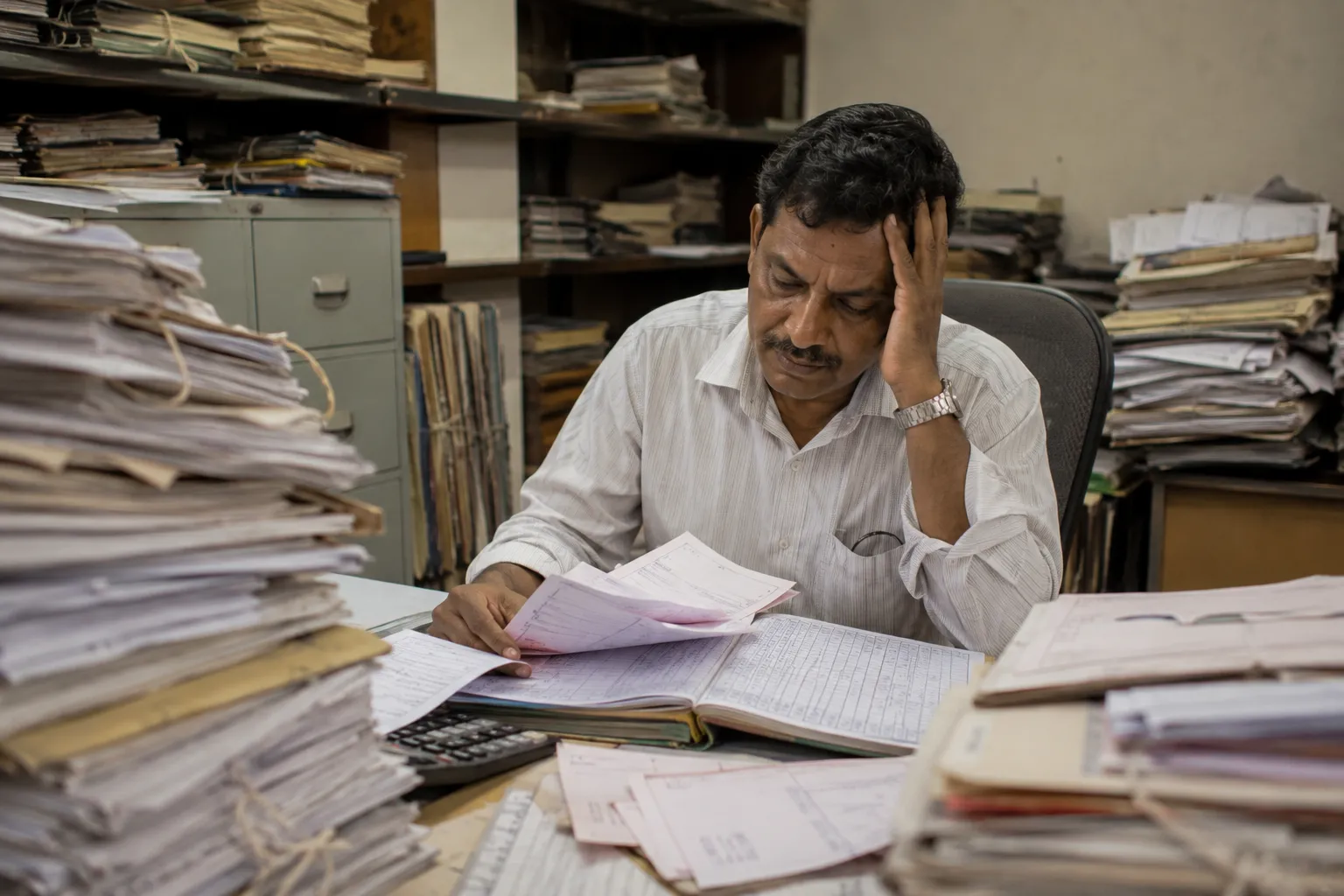
1. Manual Processes Are Bleeding Your Productivity: HR professionals in organisations without payroll automation spend upwards of 5–7 days per month solely on payroll tasks. A payroll management system compresses that to hours — or minutes.
2. Errors Are Expensive — In More Ways Than One: A misplaced decimal, a wrong leave count, an outdated tax slab — manual payroll is riddled with opportunities for human error. In India's evolving compliance landscape, a single error can cascade into a costly audit or penalty.
3. Compliance Is Getting More Complex — Not Less: Whether it's changes to PF contribution rules, revised income tax slabs, or state-specific professional tax rates — a modern payroll system updates automatically, ensuring your business remains compliant without requiring your team to become tax law experts.
4. Employee Experience Is Now a Business Priority: Payroll errors — even minor ones — erode employee trust rapidly. Employees today expect digital-first experiences: instant payslip access, transparent salary breakdowns, and quick resolution of payroll queries through self-service portals.
5. Manual Payroll Doesn't Scale — Your Business Needs To: When you're at 50, 200, or 1,000 employees across multiple locations, departments, and salary structures, the complexity becomes unmanageable. Payroll management systems are built to scale with you — without adding headcount to your HR team.
Looking for a Payroll Management System That Does All of This?
Since 1996, RSBPL has been delivering end-to-end automated payroll and HR solutions across healthcare, pharma, hospitality, education, and manufacturing sectors. Led by Sanjive Mehta (IIT Delhi), our team combines deep domain expertise with cutting-edge technology to deliver solutions built for India's regulatory environment.
Trusted by industry leaders including HERO Motocorp, Apollo Hospital, Sharda University, Ultratech Cement, and Jaypee Group, RSBPL brings enterprise-grade payroll automation to businesses of every size.
Related Articles

Why Your Institution Is Losing Valuable Time Without an Online Student Attendance Management System
21 Feb 2026 • 6 min read

Is Your Attendance System Silently Draining Your Budget? Here's How Face Recognition Fixes That
10 Apr 2026 • 5 min read

From Clipboards to Cloud: How to Build an Effective Visitor Management System in 2026
15 May 2026 • 7 min read