Online Student Attendance Tracking in 2025: Why Old Methods Are Failing & What Actually Works

Audio Summary
Picture this: a faculty member calls out names one by one at the start of every class. Students respond — some honestly, some not. Someone marks the wrong name. A parent calls a week later asking why their child is being flagged for poor attendance when they haven't missed a single day.
Manual attendance tracking isn't just tedious — it's broken. And in an era where institutions are adopting AI-powered learning tools, cloud-based LMS platforms, and real-time dashboards, relying on paper registers or basic spreadsheets is a serious operational blind spot.
What Is an Online Student Attendance Management System?
An online student attendance management system is a digital infrastructure built to automate, monitor, and manage attendance across an institution for both students and faculty.
Rather than relying on manual roll calls or paper registers, these systems use devices, applications, and cloud-based platforms to capture attendance in real time. The data is instantly stored, retrievable in multiple formats, and accessible to all relevant stakeholders — faculty, administration, and parents.
The Real Pain Points of Traditional Attendance Methods
- Proxy attendance — A persistent problem where students mark attendance on behalf of absent peers. Traditional systems have no mechanism to verify identity.
- Manual errors — A misheard name, a wrong tick, or a lost register can distort an entire semester's attendance record.
- Delayed data — When attendance is recorded on paper and entered into a system later, it creates a lag that prevents timely intervention for at-risk students.
- No real-time visibility — Faculty, administrators, and parents often find out about chronic absenteeism too late.
- Time lost in class — Taking attendance manually can consume 5–10 minutes per session. Across hundreds of sessions a year, that's a significant chunk of actual teaching time.
- Reconciliation headaches — Compiling subject-wise, semester-wise, or student-wise reports manually is error-prone and time-consuming.
How Does an Online Student Attendance System Work?
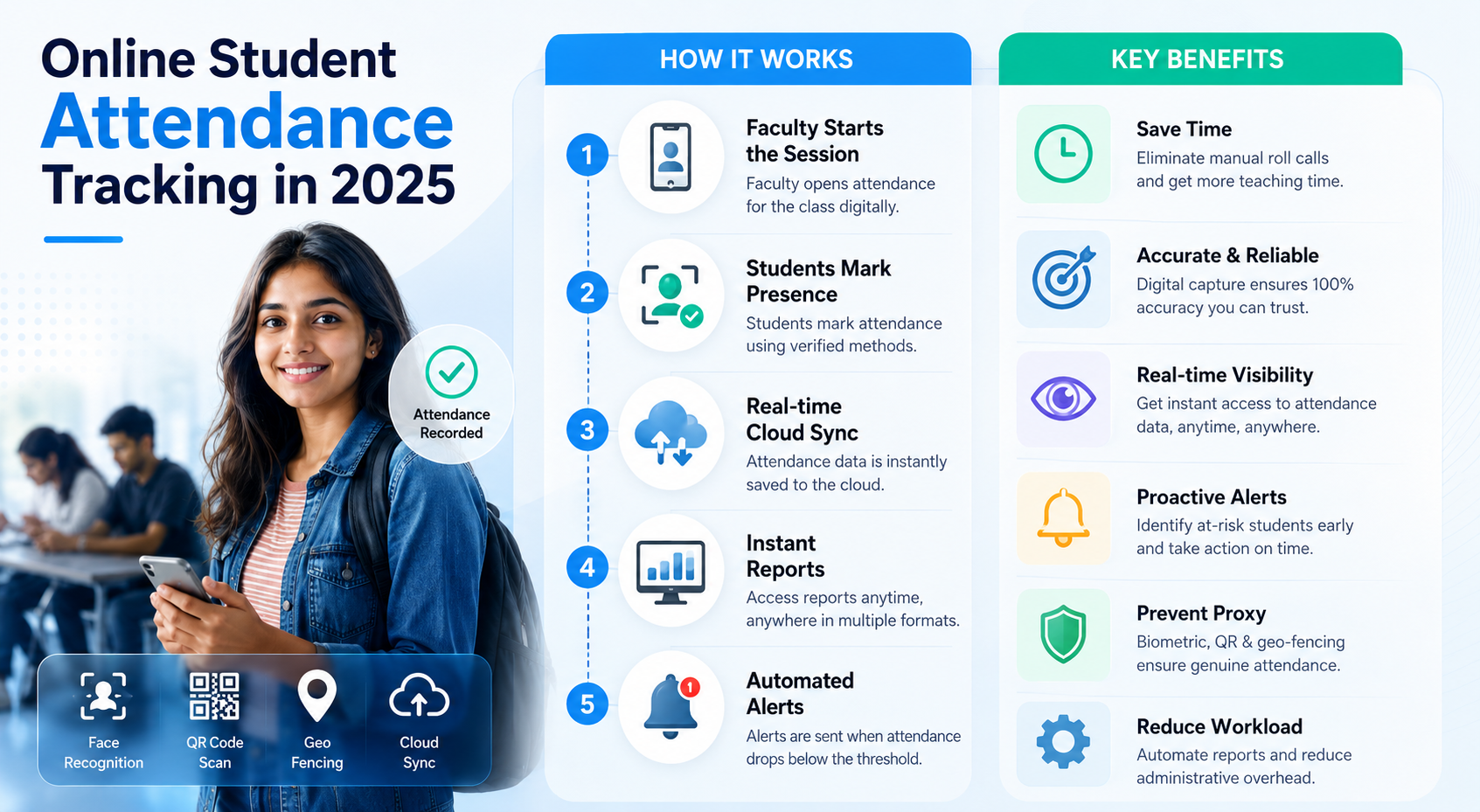
Step 1 — Faculty Initiates the Session: The faculty member begins the attendance process digitally through an app, portal, or connected device — signalling the system to open an attendance window for that class.
Step 2 — Students Mark Their Presence: Students mark attendance through their own devices or designated terminals. Advanced systems use biometrics, QR codes, geo-fencing, or RFID to verify physical presence — directly addressing proxy concerns.
Step 3 — Real-Time Cloud Sync: The moment attendance is marked, data is pushed to a cloud-based database. No manual transfer, no lag, no risk of data loss.
Step 4 — Instant, Multi-Format Reporting: Administrators and faculty can pull attendance reports at any point — filtered by student, subject, lecture, teacher, or time period. Available on demand, not at the end of the semester.
Step 5 — Automated Alerts: When a student's attendance drops below a defined threshold, the system automatically notifies parents and relevant faculty, enabling prompt intervention before the situation becomes irreversible.
Key Benefits: What Changes When You Switch
Time Saved, Teaching Restored: Eliminating the manual roll call gives back meaningful class time — reinvested into actual instruction, discussion, or student interaction.
Accuracy You Can Rely On: Digital capture eliminates transcription errors. What's recorded is what happened. This is especially critical when attendance data feeds into eligibility criteria for exams or certifications.
Instant Data Access, Anywhere: Attendance data is accessible in real time, from any device, in whatever format is needed — student-wise, subject-wise, lecture-wise, or semester-wise.
Proactive, Not Reactive: Automated alerts mean stakeholders don't have to discover attendance problems — they're informed the moment a pattern emerges. This shifts institutions from reactive crisis management to proactive student support.
Fraud and Proxy Prevention: When systems use biometric verification, geo-fencing, or QR-based authentication, proxy attendance becomes virtually impossible.
Reduced Administrative Overhead: The endless cycle of data entry, reconciliation, and report generation that burdens administrative staff is eliminated or dramatically reduced.
Frequently Asked Questions
What is the best way to track online student attendance? The most effective approach combines a cloud-based attendance management system with identity verification such as biometrics, QR codes, or geo-fencing to ensure accuracy and prevent proxy attendance.
Can attendance systems integrate with existing LMS platforms? Yes. Most modern student attendance management systems are built with API support or native integration capabilities for popular LMS platforms.
How do automated attendance alerts work? The system monitors each student's attendance percentage in real time. When it falls below a configurable threshold, automated notifications are sent to parents and faculty via SMS, email, or app push alerts.
Is cloud-based attendance tracking secure? Reputable systems use encrypted cloud storage with role-based access controls, ensuring only authorised stakeholders can view or manage attendance data.
The Bottom Line
Traditional attendance practices weren't designed for the complexity of modern institutions. They create data gaps, operational inefficiencies, and — most critically — miss the window to support students before small problems become serious ones.
Online student attendance management systems don't just digitise a manual process. They transform attendance from a passive administrative task into an active, real-time data stream that empowers institutions to make better decisions, faster.
If your institution is still taking attendance the old way, the question isn't whether to upgrade — it's how much longer you can afford not to.
Related Articles
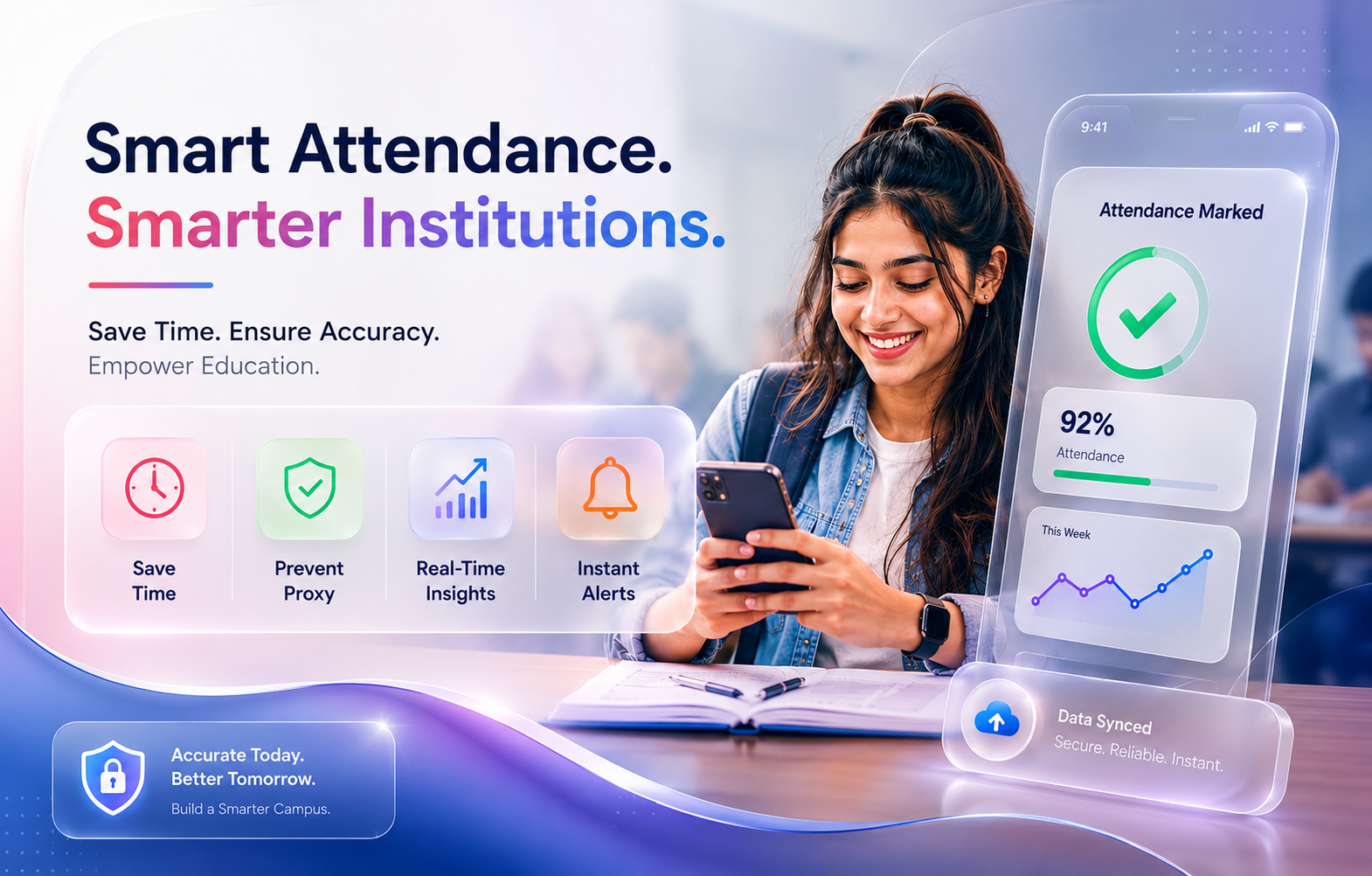
Why Your Institution Is Losing Valuable Time Without an Online Student Attendance Management System
21 Feb 2026 • 6 min read
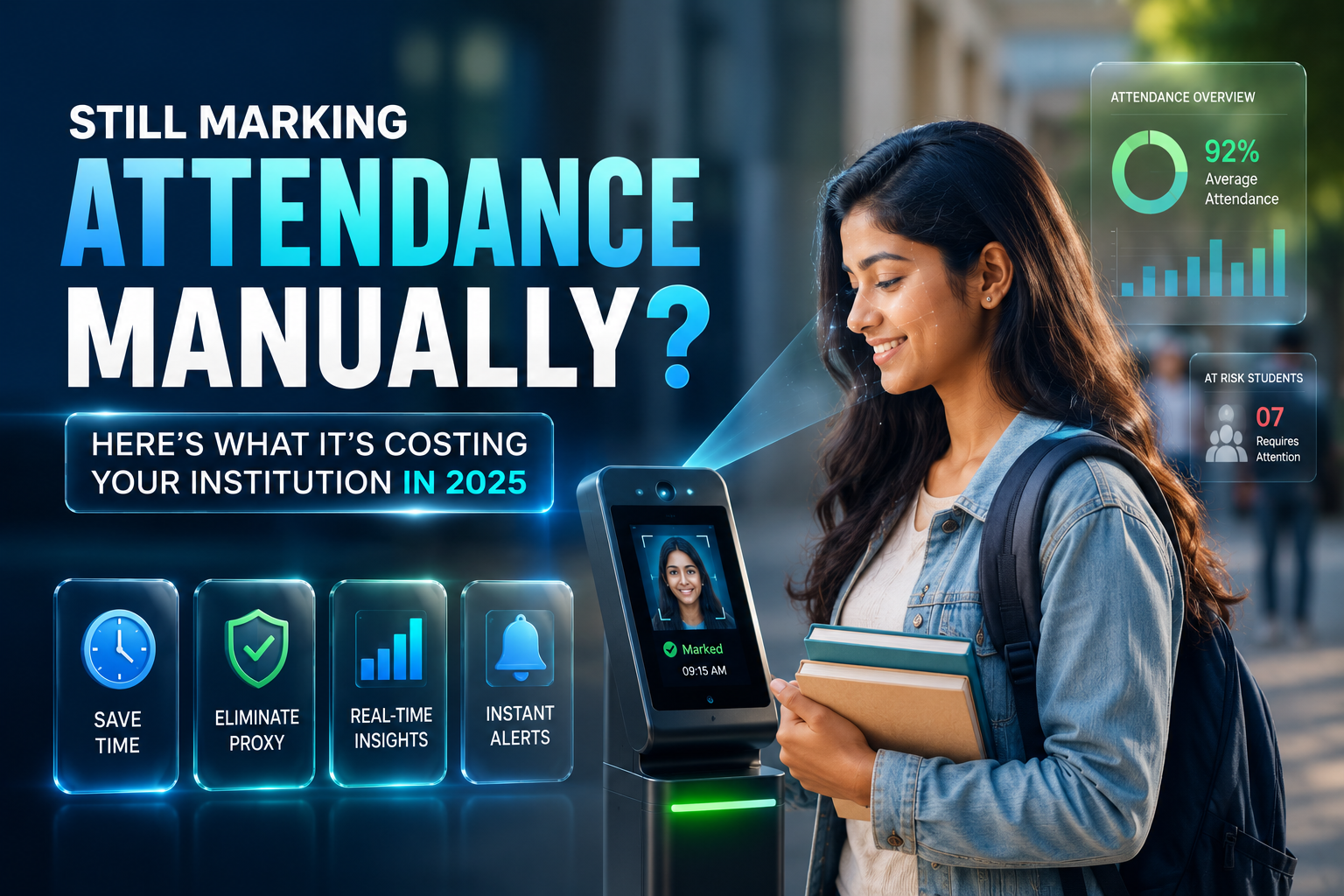
Still Marking Attendance Manually? Here's What It's Costing Your Institution in 2026
01 Jun 2026 • 6 min read
From Clipboards to Cloud: How to Build an Effective Visitor Management System in 2026
15 May 2026 • 7 min read