Why Schools Are Ditching Roll Calls for AI Face Recognition Attendance Systems

Audio Summary
Every minute a teacher spends calling out names is a minute not spent teaching. In a 40-minute class period, a traditional roll call can consume 5–8 minutes — that's nearly 20% of instructional time lost to administrative routine. Add proxy attendance, inaccurate records, and delayed parent notifications to the mix, and it's clear that manual attendance is a systemic problem that schools can no longer afford to ignore.
What Is a Student Attendance Management System?
A Student Attendance Management System is an integrated digital ecosystem that combines AI-based attendance hardware (such as a face recognition terminal), cloud-based software, and a centralised database — all working in real time to automate the attendance process from end to end.
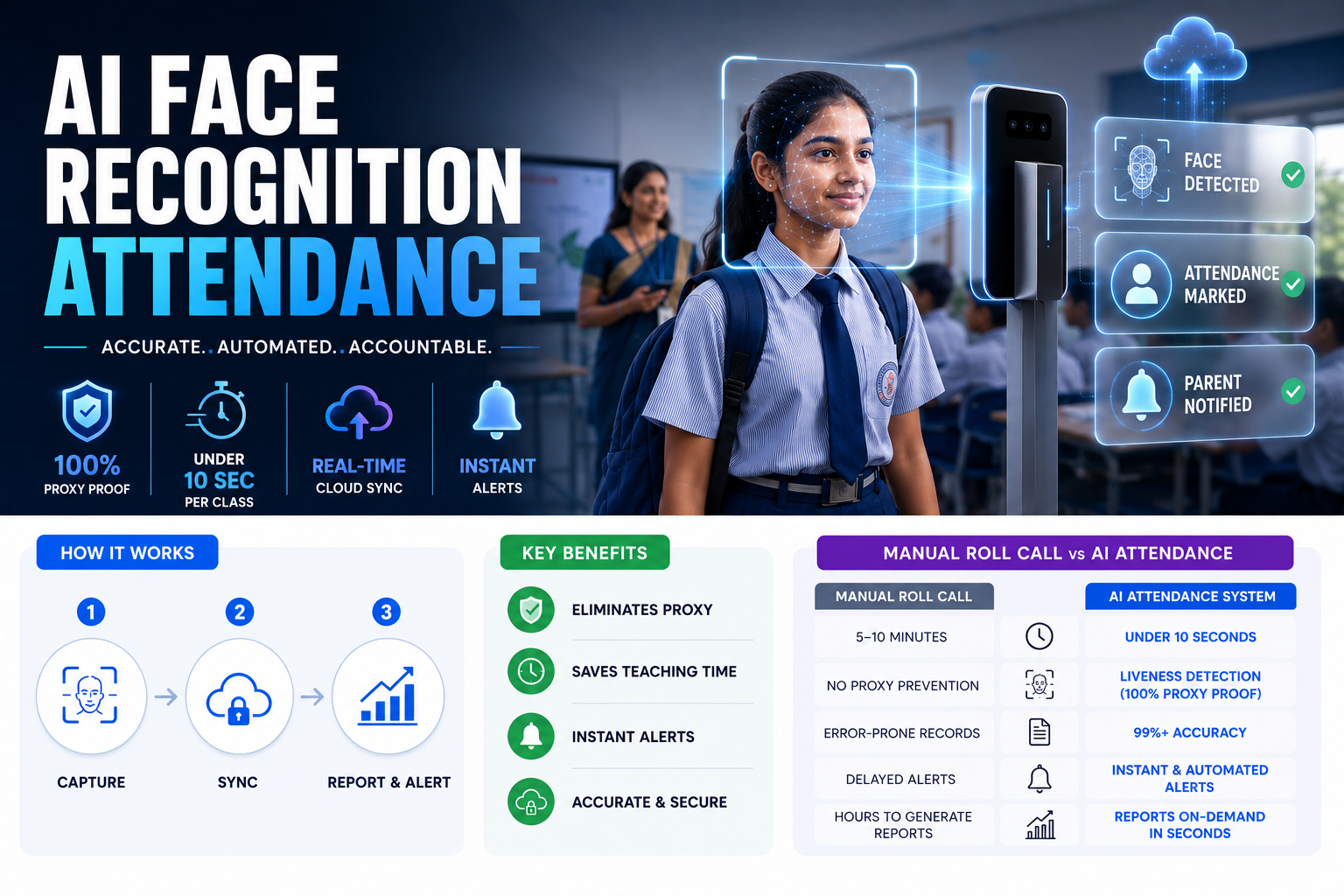
Unlike legacy solutions like biometric fingerprint scanners or swipe cards that can still be gamed, modern systems use live face recognition technology to ensure that only the actual student can mark their own attendance — eliminating proxies at the hardware level. A process that once took 7–10 minutes per class now takes under 10 seconds for the entire room.
How Does an AI Face Recognition Attendance System Work?
Step 1 — Instant Biometric Capture: The student stands briefly in front of the face recognition terminal. The system identifies and verifies the student's live face in under 0.1 seconds — no card, no PIN, no waiting.
Step 2 — Real-Time Cloud Sync: The moment attendance is marked, the data is encrypted and pushed to a central cloud server. Records are always current — accessible by administrators, faculty, and authorised parents from any device, anytime.
Step 3 — Automated Reporting & Alerts: The system's dashboard generates real-time attendance reports with zero manual input. If a student's attendance dips below the required threshold, the system immediately triggers alerts to parents, class teachers, and administrators.
Key Pain Points This System Directly Solves
- Proxy Attendance: Face recognition with liveness detection cannot be beaten. The system verifies a live human face in real time, making proxies technically impossible.
- Wasted Teaching Time: Roll calls pull focus away from instruction. An automated system completes attendance silently in the background — no teacher input required.
- Delayed Shortage Alerts: In manual systems, attendance shortages are often caught weeks later — too late for meaningful intervention. An automated system flags issues within hours.
- Unreliable Records & Human Error: A centralised cloud database maintains a tamper-proof, time-stamped audit trail — eliminating handwritten errors and deliberate tampering.
- Report Generation Overload: The system generates granular, exportable reports on demand — in seconds, not hours.
Who Is This System Built For?
Whether you manage a K-12 school, a university campus, a coaching institute, or a vocational training centre — if tracking student presence is a daily operational challenge, this system is built for you. It scales from a single classroom terminal to a multi-campus deployment, all unified under one dashboard.
Frequently Asked Questions
Is face recognition attendance data privacy compliant? Reputable systems encrypt biometric data at capture and store it in compliance with applicable data protection regulations. Always verify compliance certifications with your vendor.
What happens if a student's face isn't recognised? The system flags the student for manual verification by the supervising faculty — ensuring no one falls through the cracks.
Can parents track their child's attendance in real time? Yes. Most modern systems include a parent portal or mobile app that provides live updates on attendance status and shortage alerts.
Does the system work for remote or hybrid learning? Hybrid-capable versions integrate with LMS platforms to track virtual attendance via camera-based verification during online sessions.
Conclusion: The Cost of Waiting Is Higher Than You Think
Every academic year an institution continues with manual attendance is another year of wasted instructional time, undetected absenteeism, and avoidable administrative overhead. The technology to solve this problem exists today — it's accurate, scalable, and cost-effective.
AI-powered student attendance systems aren't a futuristic upgrade. In 2026, they're a baseline expectation for institutions that take student outcomes seriously. The only question left is: how much longer can your institution afford not to make the switch?
Related Articles
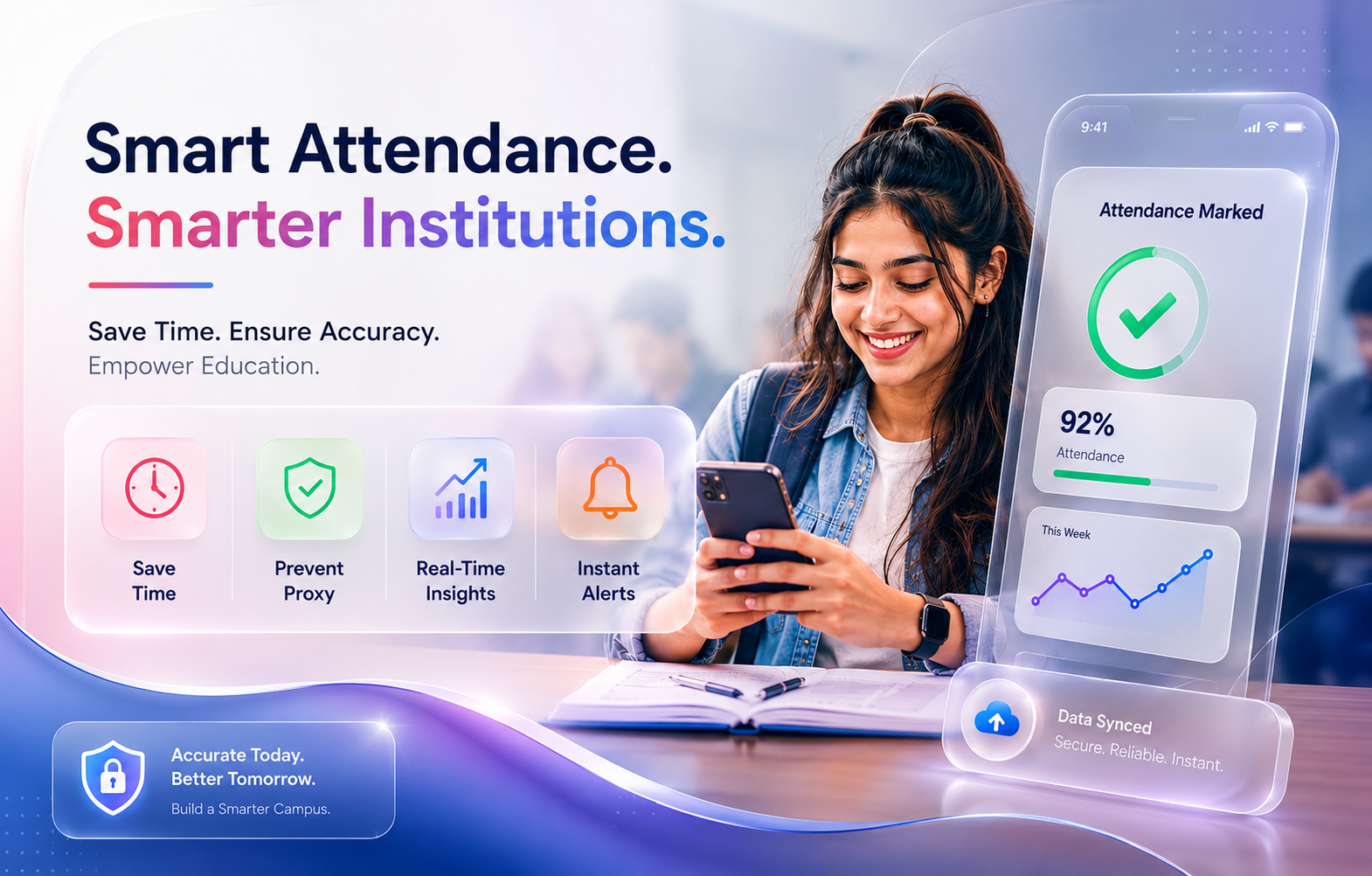
Why Your Institution Is Losing Valuable Time Without an Online Student Attendance Management System
21 Feb 2026 • 6 min read
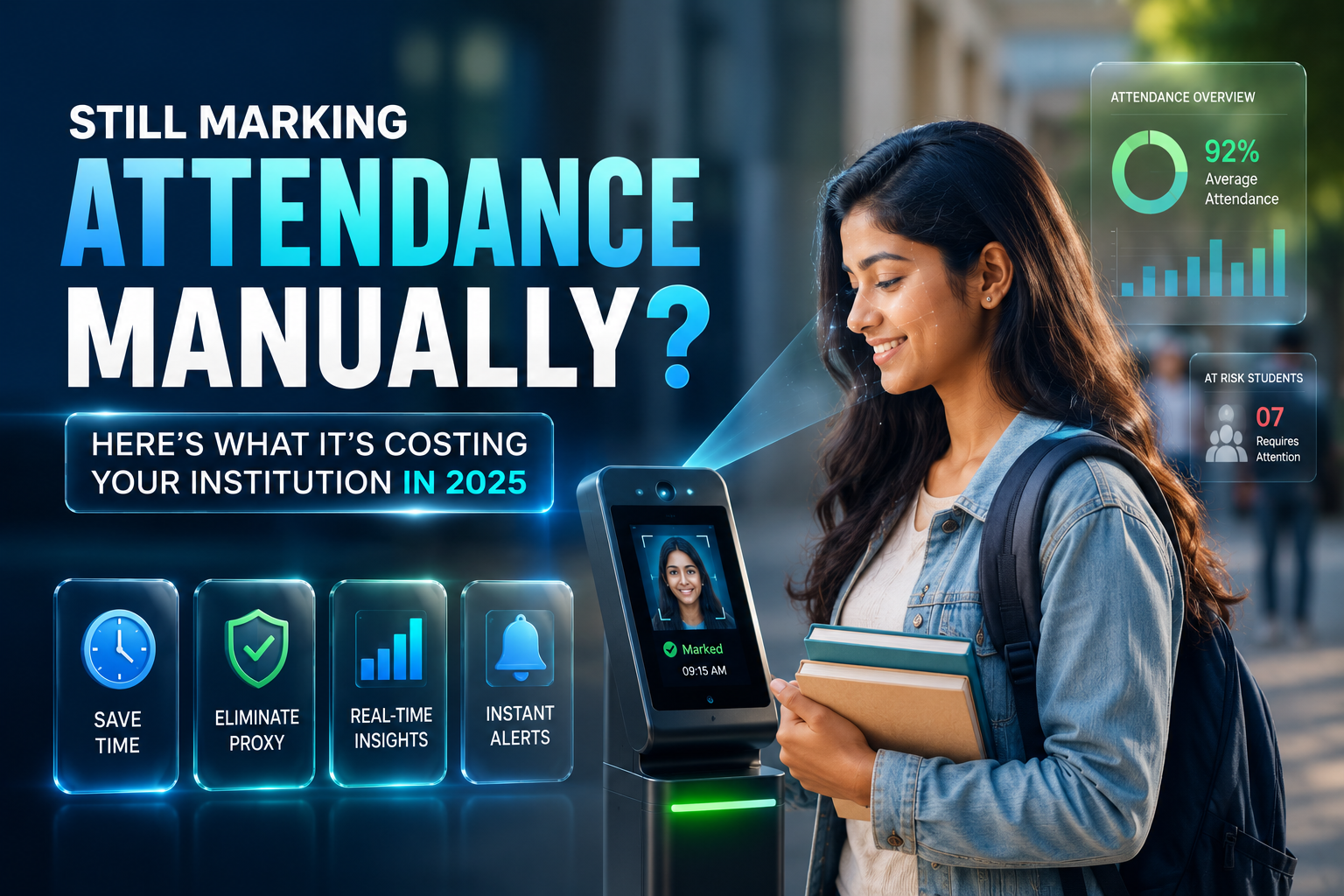
Still Marking Attendance Manually? Here's What It's Costing Your Institution in 2026
01 Jun 2026 • 6 min read

From Clipboards to Cloud: How to Build an Effective Visitor Management System in 2026
15 May 2026 • 7 min read